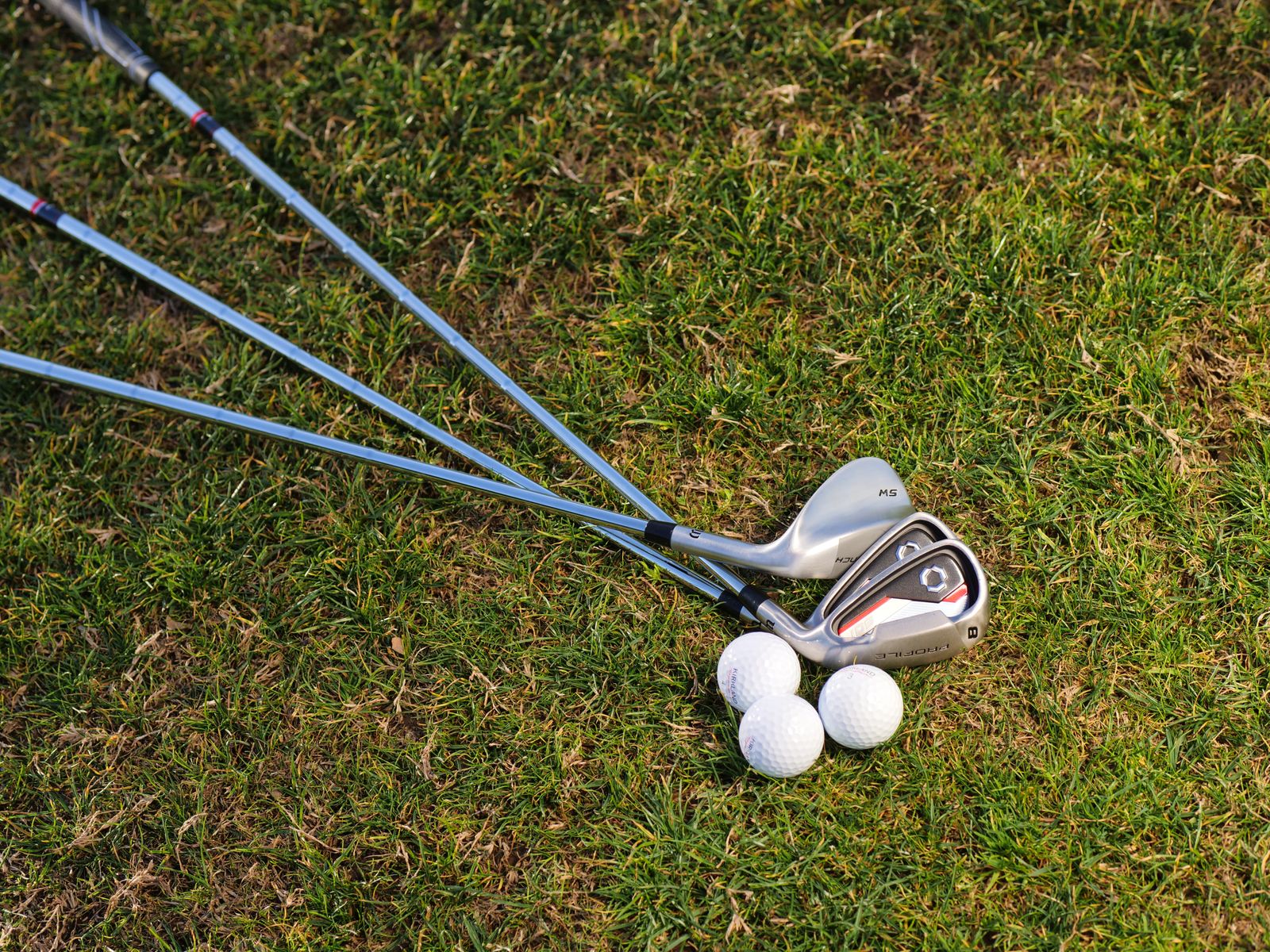
In short: Start with the make and the age of your set: if your irons are 10-year-old Callaways, look for a Callaway of a similar age. Then check the shaft (steel or graphite) and its flex. Beyond that it is personal: if you like the club, have it.
Start with the make and age
All golf clubs are fundamentally the same, so matching one to your set is a personal thing. The most useful starting points are the make and the age of your set. If your clubs are 10-year-old Callaways, for example, a Callaway of a similar age is the most likely to look and feel right alongside them. The model name, usually on the sole or the back of the head, narrows it down further.
Then the shaft
Check whether your set has steel or graphite shafts, and which flex: regular, stiff or senior, for example. Most of our listings give the shaft and flex in the title. If you don’t know your flex, our shaft flex guide shows where to find it and which suits your swing. On Ping irons, match the colour dot as well: it shows the lie angle the club was built to (see Ping colour codes).
If a club is close but not quite right, our GripNRepair service can do most adjustments, such as length and lie, and fit a grip to match your others.
If you like it, have it
Most golfers complicate things. Our advice, after many years of matching single irons: if you like a club, have it. Liking a club gives you confidence, and that matters more than a perfect match on paper.
Questions about matching an iron
The make and the age of your set, then the shaft (steel or graphite) and its flex.
No. A club of the same make and a similar age usually sits well in the set, and in the end it is personal: if you like the club, have it.
Yes. Our GripNRepair service does most adjustments, such as length and lie, and can fit a grip to match your others.
Tell us the make, model, shaft and flex of your set: we hold more single irons than we have listed online.